Organize a narrow pantry so ingredients stay easy to find
· Editorial team dallasnewssarah.com
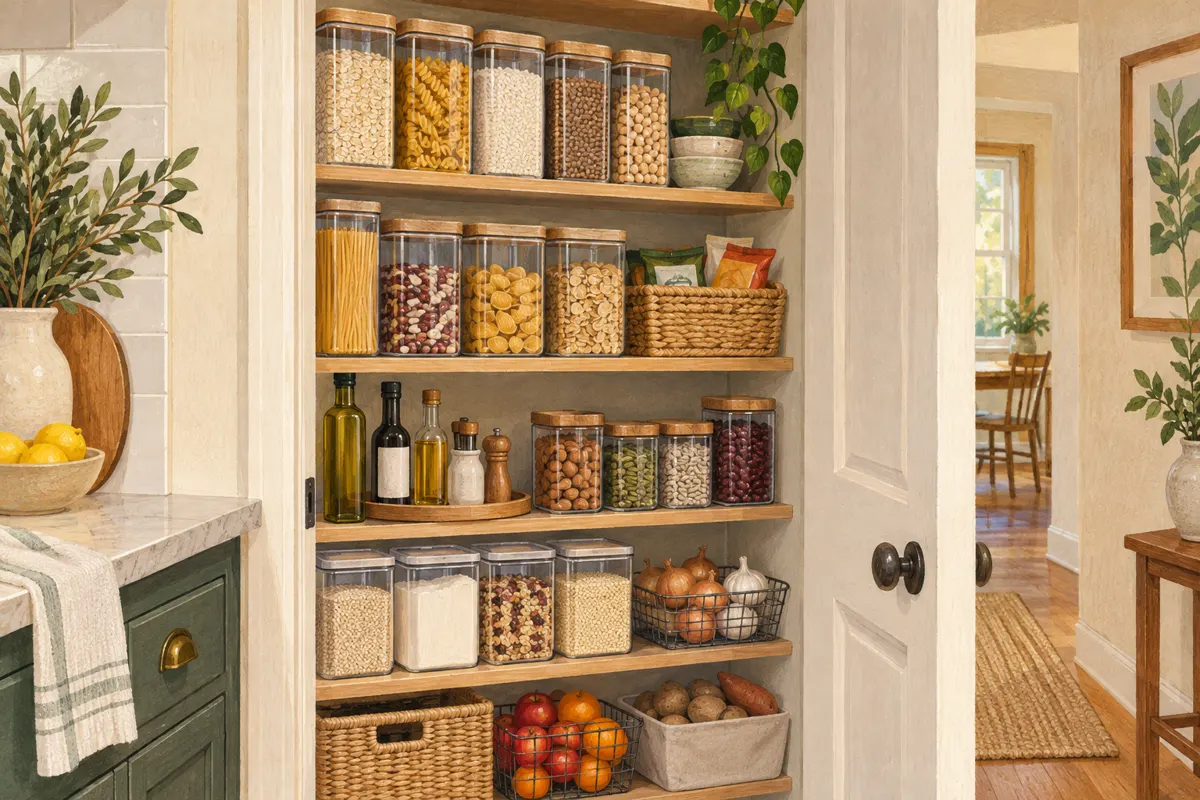
Organize a narrow pantry around the meals and tasks you use it for: breakfast, baking, snacks, and dinner preparation. Keep frequently used ingredients near the front at a comfortable height, give each group a defined space, and label the shelf edges. Start with the food you already have, then choose containers only where they make ingredients easier to see and retrieve.
Empty the shelves and plan for your usual groceries
Take everything out so you can see both your supplies and the available shelf space. Gather pantry ingredients stored elsewhere in the kitchen, too. Seeing them together helps you spot duplicates and decide what needs a permanent home. Wipe the shelves before putting food back.
- Sort items into everyday ingredients, occasional supplies, and unopened extras.
- Review package dates and condition, and remove items you no longer intend to use.
- Check your usual grocery list so the layout includes space for staples that are currently missing.
- Measure shelf width, depth, and the opening before choosing bins or shelf inserts.
Plan around a normal grocery load. A layout that works only when the pantry is nearly empty will be difficult to maintain after restocking. Leave enough room to return a package without rearranging its neighbors.
Group ingredients by the way you cook
Task-based groups let you gather related ingredients from one area. You do not need a fixed number of zones; choose categories that match your household. The following is a proposed starting layout, which you can adjust to your cooking habits.
- Breakfast: oatmeal, cereal, and breakfast toppings.
- Baking: flour, sugar, baking powder, and baking additions.
- Dinner staples: rice, pasta, canned beans, and tomatoes.
- Sauces and seasonings: pantry-stable bottles, jars, and spice packets.
- Snacks and lunch packing: crackers, bars, and individual snack packages.
Give ingredients used for several tasks one consistent home. Rice, for example, can stay with dinner staples even if you occasionally use it elsewhere. Avoid splitting the same category across several shelves unless space requires it. Keep unopened replacements together in a clearly identified reserve area.
Put everyday ingredients within easy reach
Assign the easiest-to-reach space to what you use most often. Daily dinner ingredients belong near the front, while occasional baking decorations can occupy a less convenient corner. If children retrieve their own snacks, give those snacks an accessible shelf that fits your household’s routine.
In a deep, narrow pantry, avoid placing unrelated products directly behind one another. A pull-out bin can bring a whole category forward. A shelf riser can make a back row visible, while a turntable may help with bottles in an awkward corner. Choose the option that fits the shelf and leaves room to remove items.
Before settling the arrangement, retrieve a few common ingredients as though you were making dinner. If you must lift out several unrelated things to reach one package, move it forward or simplify that shelf.
Use containers where they solve a space problem
Keep original packaging when it fits neatly and remains easy to identify. Transfer frequently stocked dry ingredients into suitable food-storage containers when bulky or floppy packaging makes the shelf harder to use. Label the contents and retain any package information you need.
- Use a narrow bin for small packets that otherwise slip between larger packages.
- Group individually wrapped snacks in one accessible basket.
- Choose containers that fit the shelf height and can be lifted out easily.
- Check that stacked containers remain practical to retrieve before committing to that arrangement.
Label shelf edges and reset when you restock
Place a plain-language label on the shelf edge beneath each group. Names such as “Baking,” “Dinner staples,” and “Extra supplies” explain where groceries belong even when a bin is empty. Label movable bins as well, so their purpose stays clear when someone carries them to the counter.
At restocking time, return stray items, check the reserve area before adding duplicates, and put replacements behind the package already in use. If one zone repeatedly overflows, adjust its space or narrow its category. The useful layout is the one your household can follow during ordinary cooking and grocery unpacking.