Set up a homework station that packs away before dinner
· Editorial team dallasnewssarah.com
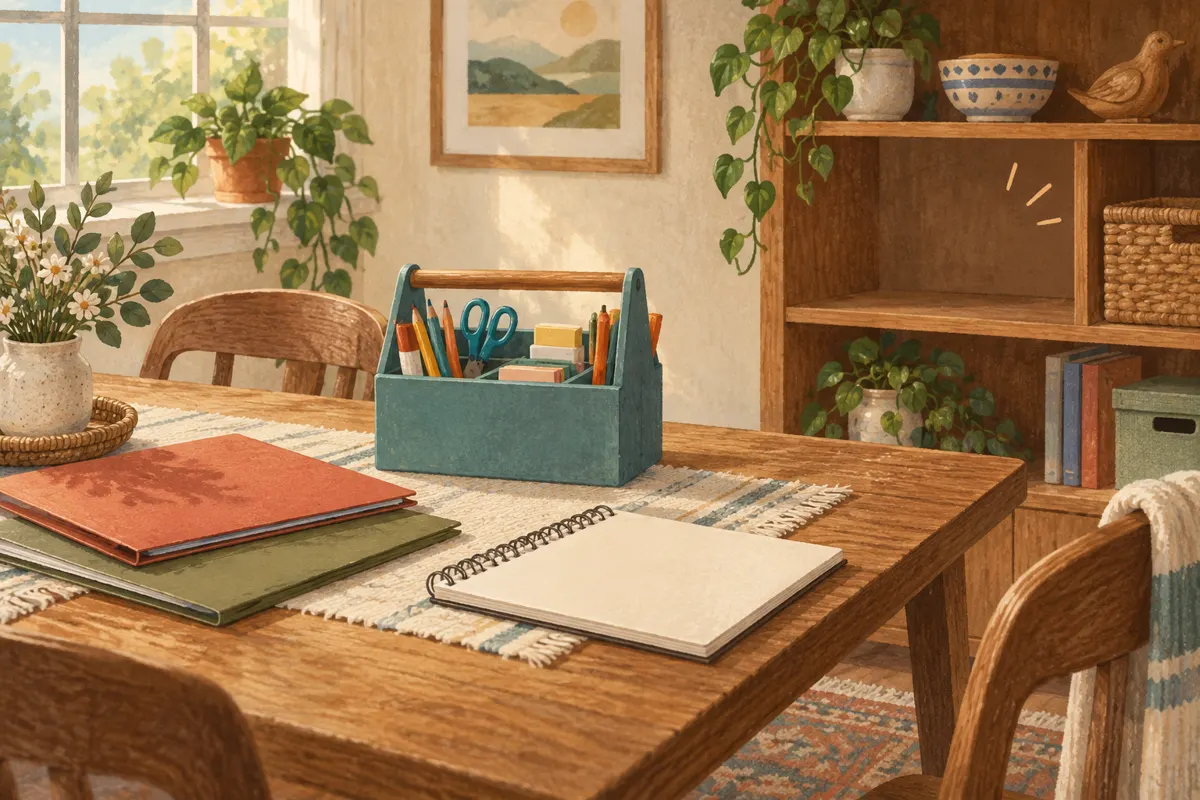
Use one portable caddy for everyday supplies, separate folders for each child’s papers and a nearby shelf where everything goes before dinner. Bring out only what the current assignment needs. The proposed setup below gives schoolwork a predictable home while keeping the dining table available for meals.
Choose the storage spot before filling the table
Start by deciding where the homework kit will live when the table is needed. A cleared cabinet shelf, a section of the dining room hutch or a nearby bookcase can work. Choose a place your child can reach and check that the caddy and folders fit together without squeezing or stacking loose papers.
Then check the working spot: a usable chair, enough light and a clear surface for a notebook or book. If the tabletop is uneven, bring out a firm writing board with the kit. Leave room for each child’s work rather than filling the center with supplies.
Build a caddy around everyday assignments
Use a handled container or a tray with stable compartments that you already own. Group similar items so children can see what is available and return it easily. Start with the supplies their assignments actually require; a homework caddy does not need to hold the entire craft collection.
- Sharpened pencils, pens when needed and a usable eraser.
- A contained pencil sharpener and a ruler.
- A small selection of colored pencils or markers.
- A glue stick and age-appropriate scissors if assignments call for them.
- A few sheets of scratch paper in a folder beside the caddy.
Keep spare supplies and occasional tools on the storage shelf. Bring out a calculator, protractor or larger craft materials for the assignment that needs them, then return them separately. Before using the caddy, try carrying it with everything inside. If items tip over or fall out, reduce the contents or change the compartments.
Give papers a separate route
Avoid putting worksheets underneath the supply container. Our proposed paper system is one clearly named homework folder per child, plus a shared folder for papers that need an adult’s attention. Store these upright in a magazine file or together in a shallow tray beside the caddy.
- Work in progress: keep unfinished assignments in the child’s homework folder.
- Ready for school: place completed work in the school folder or backpack after checking the assignment instructions.
- Adult action: put permission slips and other papers needing a signature in the shared folder.
- Reference sheets: keep instructions or frequently used help sheets in a separate pocket.
For signed forms, choose a clear return point, such as the child’s school folder. Do not let completed paperwork sit indefinitely in the adult-action folder. When several children share the table, names on folders make ownership clear without requiring a different set of shared tools for everyone.
Make packing away part of homework time
Agree on a cleanup cue before work starts: when the assignment ends or when someone begins setting the table. Give unfinished work a place to pause so clearing the table does not mean losing track of the next step. The following sequence is a proposed household routine.
- Check the assignment instructions and put finished work in the correct school folder.
- Place unfinished work in the homework folder, with a note or bookmark showing where to resume.
- Sort papers needing an adult’s attention into the shared folder.
- Return tools to their compartments, cap markers and collect pencil shavings or scraps.
- Carry the caddy and folders to their storage spot, put books away and clear the surface for dinner.
Adjust what repeatedly gets left behind
After using the setup, look at what still lands on the table. Loose worksheets may need a larger folder; a crowded caddy may need fewer supplies. If cleanup requires several trips, move the storage closer or give bulky books their own nearby spot.
As a proposed weekly reset, remove obsolete papers, replenish scratch paper and check pencils and glue. Let children help decide where frequently used items belong. If dinner preparation makes concentration difficult, move the same portable kit to a quieter table for that session.